
Infiltration testing for stormwater design
Retention basins, drywells, and infiltration trenches depend on the soil's ability to absorb and transmit stormwater. We measure the site-specific infiltration rate so your civil engineer can properly size the system and support agency review and approval.
What it is
Some projects are required to keep stormwater on the property instead of letting it flow into the street. This may be done with drywells, infiltration trenches, basins, permeable pavement, or similar systems.
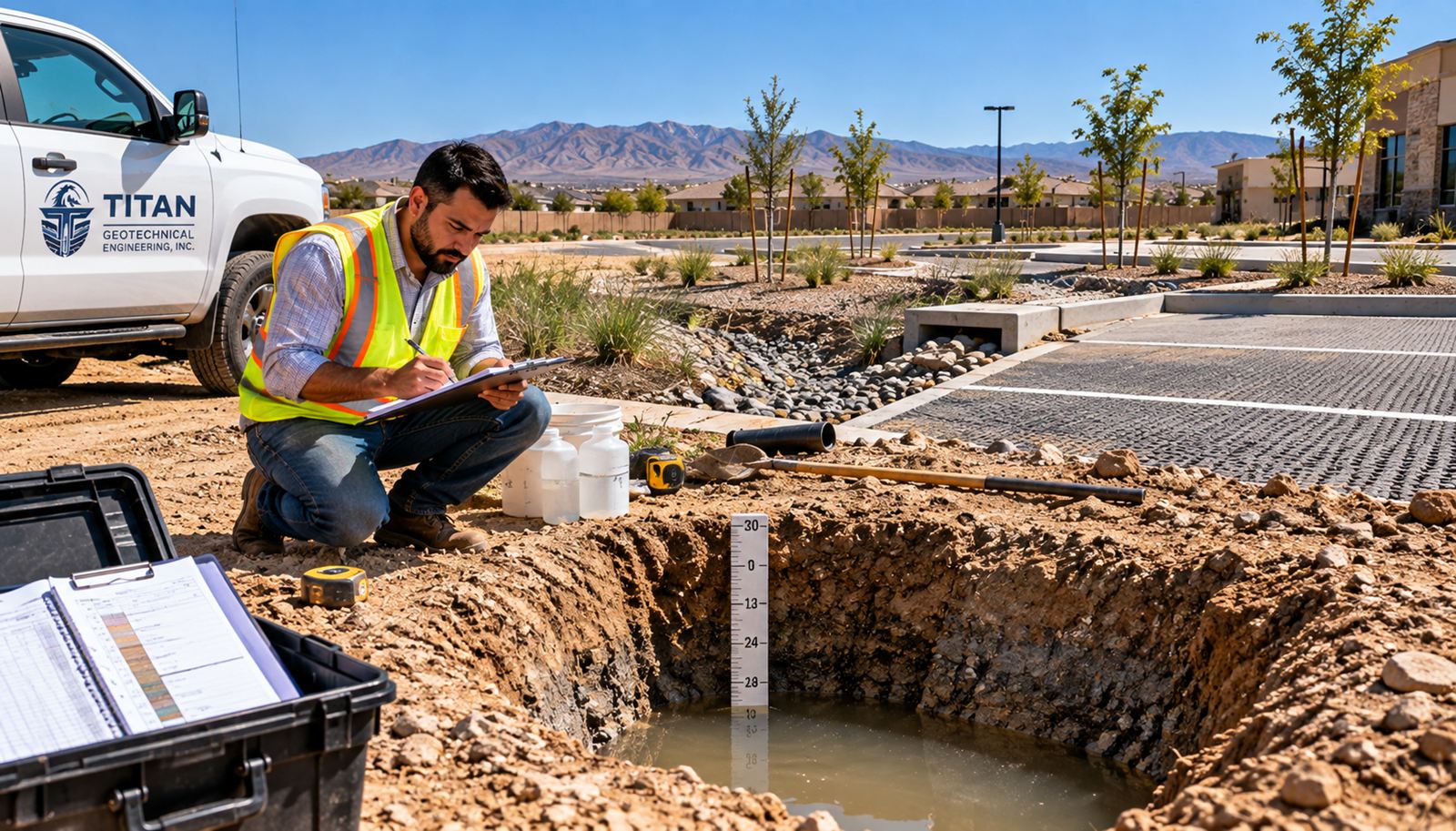
Infiltration testing measures how quickly water can soak into the soil where the system will be built. We test the soil, document the site conditions, and provide a stamped report with the results your civil engineer can use to design the stormwater system.
When you need it
Infiltration testing is usually requested at one of these points.
Commercial & industrial development
New buildings, warehouses, and gas stations that must retain stormwater on site in basins, drywells, or underground systems.
Subdivisions & tracts
Retention and infiltration basins sized for a whole development, coordinated with the grading plan.
Parking lots & permeable pavement
Infiltration rates beneath proposed permeable pavement or bioretention areas.
Drywells & infiltration trenches
Testing at the depth of the proposed drywell or trench so it's sized for the soil it will actually discharge into.
Agency comment
If a plan checker asked for an infiltration rate or a stormwater feasibility evaluation, send us the comment letter.
Combined with a geotechnical report
Infiltration testing is often added to a geotechnical investigation so both are done in one mobilization.
What's included
- Review of the grading and drainage plan and the proposed facility locations and depths
- Utility clearance through DigAlert (811)
- Borings or test pits to the depth of each proposed facility
- Field infiltration testing per the reviewing agency's procedures
- Soil logs and groundwater observations relevant to the required separation
- Measured infiltration rates and a recommended design infiltration rate
- Stamped infiltration report for your civil engineer and the agency
- Responses to plan-check comments on the infiltration report
Typical timeline
- Day 1
Quote & scope
Send the site plan or grading plan with the proposed basin, drywell, or trench locations.
- Scheduling and site reconnaissance
Site visit booked
We schedule site reconnaissance to mark the site for 811 DigAlert. 2 to 3 business days will be needed for utility companies to mark/clear the public underground utilities.
- On site
Testing
Borings or pits are excavated to the facility depth and tested; some procedures include a pre-soak.
- Final
Report
Stamped infiltration report. Contact us for a project-specific timeline.
Common questions
What's the difference between an infiltration test and a perc test?
Both measure how quickly water moves into the soil, and the field work is similar. A perc test is for a septic system and follows Public Health procedures. An infiltration test is for stormwater facilities — basins, drywells, trenches, and permeable pavement — and gives your civil engineer the design infiltration rate. If your project needs both, we can do them in the same visit.
Does my project need infiltration testing?
It depends on the agency, the size of the project, and how your civil engineer is handling stormwater. Most new commercial and multi-lot developments that infiltrate runoff on site need it; many small residential projects don't. Send us the grading plan or the plan-check comment and we'll tell you what's required.
Are you licensed?
Yes. Titan's reports are prepared under the responsible charge of, and stamped by, Mohammed Khalid, MS, PE — a California Registered Professional Civil Engineer (PE No. C94550) with over 10 years of geotechnical engineering experience. You can verify any California engineering license on the Board for Professional Engineers, Land Surveyors, and Geologists (BPELSG) license lookup at bpelsg.ca.gov.
Designing a basin, drywell, or trench?
Send us the site plan with the proposed facility locations and depths. We'll reply with a testing scope, a fixed fee, and a schedule.